
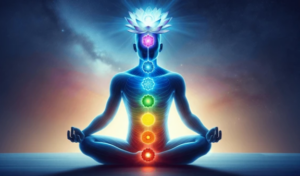
In yogic philosophy, the human body is not only made of flesh and bones, but also of subtle energy. This life energy is called Prana. Prana flows through invisible pathways known as Nadis, and at certain important points, this energy gathers and spins. These energy centers are called Chakras.
The word chakra comes from Sanskrit and it means “wheel” or “disc”, symbolizing spinning energy. There are seven main chakras, aligned along the spine, from the base of the spine to the top of the head. Each chakra is connected to physical health, emotions, thoughts, and spiritual growth.
When chakras are balanced, energy flows freely and we experience well-being. When they are blocked or imbalanced, it can reflect as physical discomfort, emotional disturbances, or mental stress.
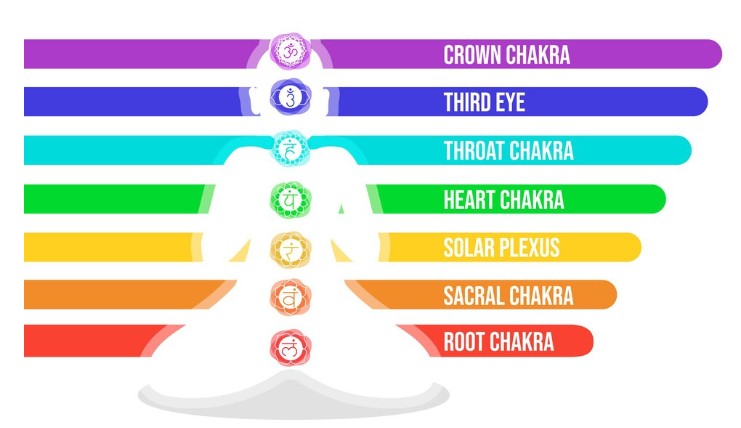
The Seven Chakras are:
- Root Chakra (Muladhara)
💫Location: Base of the spine
💫Element: Earth
💫Associated with: Safety, stability, survival
The Root Chakra is our foundation. It relates to basic needs like food, shelter, health, and feeling grounded. When balanced, we feel secure and strong. When imbalanced, fear, anxiety, or insecurity may arise.
- Sacral Chakra (Svadhisthana)
💫Location: Lower abdomen
💫Element: Water
💫Associated with: Emotions, creativity, pleasure
This chakra governs our emotions, relationships, and creative expression. A balanced Sacral Chakra allows us to enjoy life and express feelings freely. Imbalance may show as emotional instability or lack of creativity.
- Solar Plexus Chakra (Manipura)
💫Location: Upper abdomen, near the navel
💫Element: Fire
💫Associated with: Confidence, willpower, self-esteem
Manipura is the center of personal power. It influences decision-making, motivation, and digestion. When balanced, we feel confident and energetic. When disturbed, it may lead to low self-esteem or anger.
- Heart Chakra (Anahata)
💫Location: Center of the chest
💫Element: Air
💫Associated with: Love, compassion, connection
The Heart Chakra bridges the lower and upper chakras. It represents unconditional love, empathy, and forgiveness. Balance here helps us build healthy relationships. Imbalance may lead to emotional pain or isolation.
- Throat Chakra (Vishuddha)
💫Location: Throat
💫Element: Ether (Space)
💫Associated with: Communication, truth, expression
This chakra governs our ability to speak truthfully and express ourselves clearly. When balanced, communication flows naturally. When blocked, one may feel unheard or struggle to express thoughts.
- Third Eye Chakra (Ajna)
💫 Location: Between the eyebrows
💫 Element: Mind
💫 Associated with: Intuition, insight, wisdom
Ajna is the center of awareness and inner guidance. A balanced Third Eye Chakra enhances clarity, focus, and intuition. Imbalance may cause confusion or lack of direction.
- Crown Chakra (Sahasrara)
💫 Location: Top of the head
💫 Element: Consciousness
💫Associated with: Spiritual connection, enlightenment
The Crown Chakra represents our connection to higher consciousness and universal energy. When open and balanced, it brings inner peace and spiritual understanding. Imbalance may result in disconnection or lack of purpose.
Balancing the Chakras
According to yoga, chakras can be balanced through:
- Yoga asanas (postures)
- Pranayama (breathing practices)
- Meditation
- Mantras and sound
- Mindful living and self-awareness
Chakra balancing is not about forcing change, but about gentle awareness and inner harmony. Also, Chakras offer a beautiful yogic map to understand the connection between body, mind, and spirit. By becoming aware of these energy centers, we can live with greater balance, health, and inner peace. Yogic practices help awaken and harmonize chakras, guiding us toward a more conscious and fulfilling life.