

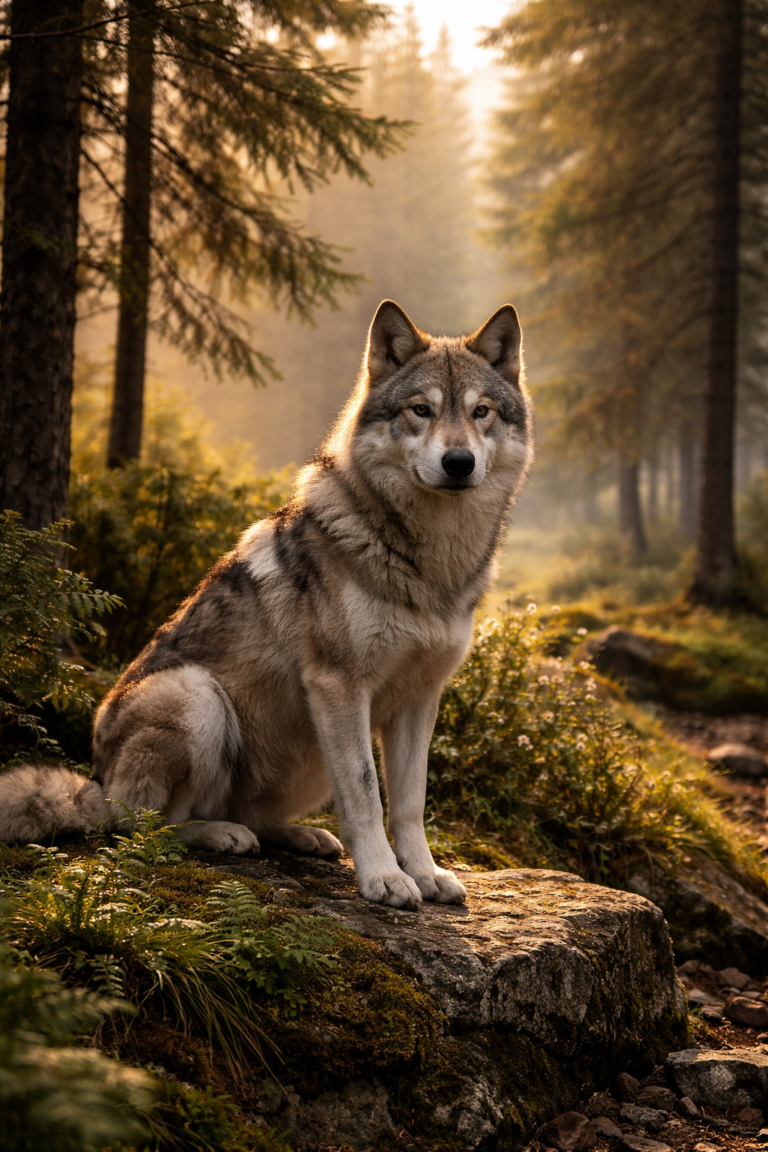
In a world that constantly tells us to belong, to fit in, and to move with the crowd, the idea of being a “lonely wolf” can feel heavy. It often sounds like isolation, sadness, or rejection. But what if the Lonely Wolf is not about loneliness at all? What if it is about strength, self-awareness, and inner freedom?
At Zaya Wellness, we believe the journey inward is the most powerful journey of all. The concept of the Lonely Wolf can be understood as a deeply philosophical and spiritual path — one that invites self-discovery rather than social withdrawal.
What Does “Lonely Wolf” Really Mean?
A Lonely Wolf is not someone who hates people. It is someone who is comfortable walking alone when necessary.
In philosophy, solitude has always been a sacred space. Great thinkers, sages, and seekers often withdrew from noise to listen to their inner voice. Being a Lonely Wolf means:
- Choosing authenticity over approval
- Valuing depth over distraction
- Seeking truth over temporary validation
It is not about rejecting society — it is about not losing yourself within it.
Solitude vs. Loneliness
There is a big difference between being alone and feeling lonely.
Loneliness is a painful emotion that comes from disconnection.
Solitude is a conscious choice that brings clarity and peace.
The Lonely Wolf embraces solitude to understand:
- Who am I without roles and labels?
- What do I truly want?
- What values guide my life?
At Zaya Wellness, we often remind our community that healing begins when you can sit with yourself without discomfort.
The Strength of Walking Alone
A wolf that walks alone is often seen as powerful, independent, and resilient. Philosophically, the Lonely Wolf represents:
1. Inner Strength
When you walk alone, you rely on your inner compass. You build emotional resilience and mental clarity.
2. Self-Trust
The Lonely Wolf trusts its instincts. In life, this means trusting your decisions even when they are unpopular.
3. Deep Awareness
Solitude sharpens awareness. Without constant noise, you begin to observe your thoughts, patterns, and beliefs more clearly.
At Zaya Wellness, we see this as the foundation of emotional wellness and spiritual growth.
The Shadow Side of the Lonely Wolf
However, there is a caution.
Independence can turn into isolation. Strength can turn into ego. Solitude can slowly become avoidance.
A true Lonely Wolf knows when to walk alone and when to reconnect with the pack.
Philosophically, life is a balance between:
- Self and community
- Silence and conversation
- Independence and interdependence
Growth happens not in extreme isolation, but in conscious choice.
Why Many People Feel Like a Lonely Wolf Today
Modern life encourages comparison and constant connection through technology. Ironically, the more we connect digitally, the more emotionally distant we sometimes feel.
Many individuals feel like Lonely Wolves because:
- They think differently
- They feel deeply
- They question societal norms
- They are on a personal growth journey
If you resonate with this, you are not broken. You may simply be evolving.
Embracing the Lonely Wolf Within
At Zaya Wellness, we believe the Lonely Wolf is a phase of awakening. It is a powerful stage of personal transformation.
To embrace this energy in a healthy way:
- Practice mindful solitude
- Journal your thoughts and emotions
- Spend time in nature
- Build self-awareness through reflection
- Stay open to meaningful connections
Remember — walking alone does not mean you are lost. It often means you are finding your true path.
Final Reflection: Alone, Yet Whole
The Lonely Wolf is not a symbol of sadness. It is a symbol of self-realization.
When you learn to be comfortable in your own presence, you stop seeking constant external validation. You become grounded, calm, and confident.
At Zaya Wellness, we encourage you to see solitude not as emptiness, but as sacred space. Because sometimes, the strongest souls are the ones who had the courage to walk alone — until they found their true pack.