
At Zaya Wellness, we deeply believe that nature offers simple yet powerful solutions for a healthy life. One such gift from nature is Tulsi, also known as Holy Basil. Revered in Indian homes for centuries, tulsi is not just a sacred plant but also a powerful medicinal herb with incredible healing properties.
In this blog, we explore the benefits of tulsi, its uses, and why it truly deserves the title “The Queen of Herbs.”
🌿 What is Tulsi?
Ocimum tenuiflorum, commonly known as Tulsi or Holy Basil, is a fragrant herb native to India and Southeast Asia. In Ayurveda, tulsi is considered a powerful adaptogen — meaning it helps the body manage stress and restore balance.
There are mainly three types of tulsi:
- Rama Tulsi (Green leaves)
- Krishna Tulsi (Purple leaves)
- Vana Tulsi (Wild variety)
Each type offers unique healing benefits, but all share strong medicinal properties.
🌱 Health Benefits of Tulsi
1️⃣ Boosts Immunity Naturally
Tulsi is rich in antioxidants and essential oils that help strengthen the immune system. Drinking tulsi tea regularly can help protect the body from common infections like cold, cough, and seasonal flu.
2️⃣ Reduces Stress and Anxiety
As a natural adaptogen, tulsi helps reduce stress hormones in the body. It calms the mind, improves mental clarity, and promotes emotional balance.
3️⃣ Supports Respiratory Health
Tulsi has anti-inflammatory and antibacterial properties that support lung health. It is often used in herbal remedies for asthma, bronchitis, and congestion.
4️⃣ Improves Digestion
Tulsi stimulates digestive enzymes and reduces bloating, gas, and acidity. A few fresh leaves after meals can support healthy digestion.
5️⃣ Promotes Healthy Skin
Its antibacterial properties help fight acne and skin infections. Tulsi also purifies the blood, which contributes to clear and glowing skin.
6️⃣ Helps Manage Blood Sugar
Studies suggest tulsi may support healthy blood sugar levels, making it beneficial for overall metabolic health.
🍵 How to Use Tulsi in Daily Life
At Zaya Wellness, we encourage simple and mindful ways to include tulsi in your daily routine:
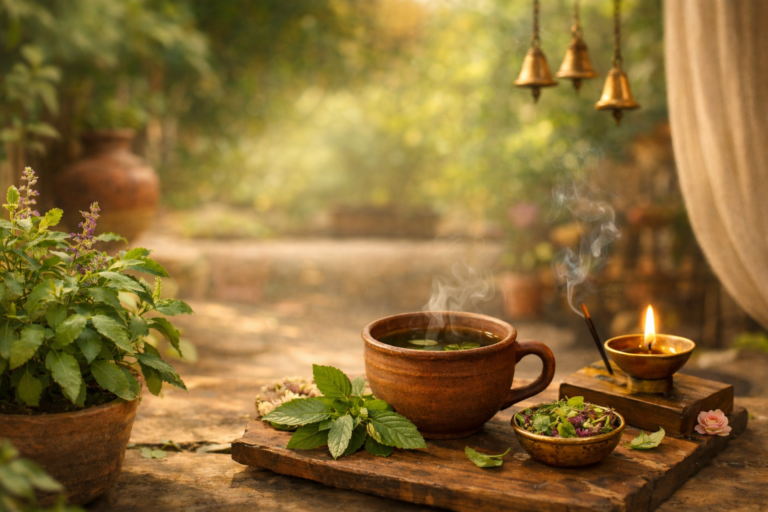
- Tulsi Tea: Boil 5–7 fresh leaves in water for 5 minutes. Strain and enjoy warm.
- Raw Leaves: Chew 2–3 leaves in the morning on an empty stomach.
- Tulsi Water: Add leaves to your drinking water bottle for gentle detox support.
- Herbal Blends: Combine tulsi with ginger and honey for immune support.
🌸 Tulsi in Ayurveda and Spiritual Wellness
In Ayurveda, tulsi is considered a “Sattvic” herb — meaning it promotes purity, clarity, and positive energy. Beyond physical health, tulsi is believed to uplift the spirit and create a calming environment in the home.
At Zaya Wellness, we view tulsi not just as a plant, but as a daily ritual of self-care and gratitude toward nature.
⚠️ Precautions to Keep in Mind
While tulsi is generally safe, moderation is important.
- Pregnant or breastfeeding women should consult a healthcare professional.
- People on medication for blood sugar or blood thinning should seek medical advice before regular use.
🌿 Final Thoughts: A Small Leaf with Powerful Healing
Tulsi reminds us that true wellness does not always come from complicated solutions. Sometimes, it begins with a simple leaf grown in your courtyard.
At Zaya Wellness, we believe in reconnecting with nature to restore balance in body, mind, and soul. Tulsi is not just a medicinal plant — it is a symbol of harmony, resilience, and holistic healing.
Let this sacred herb become part of your daily wellness journey. 🌿